
قرصان المعرفة
RageTeamTrivia
4.331.00 Reviews
- Version
- 1.4.4
- Installs
- 100.00K
- Age Rating
- Everyone
Screenshots
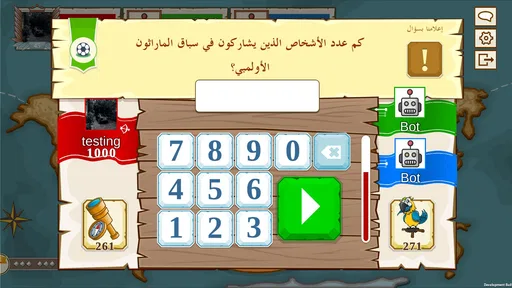
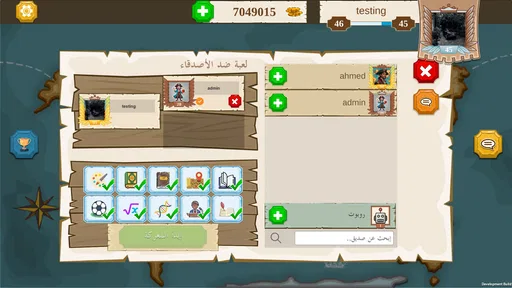
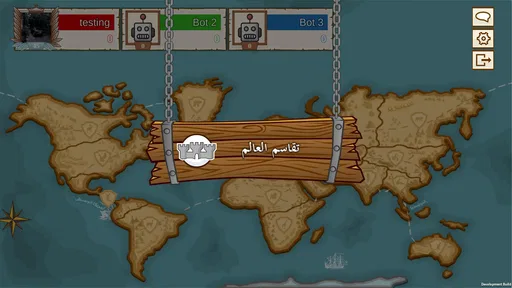
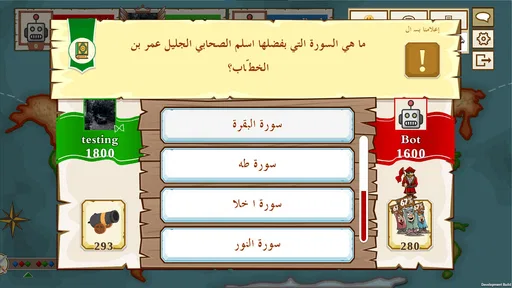
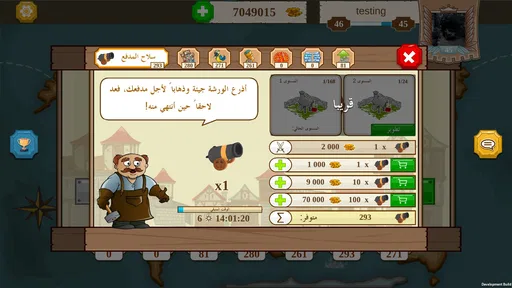
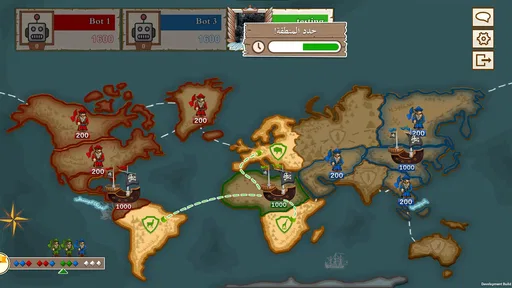
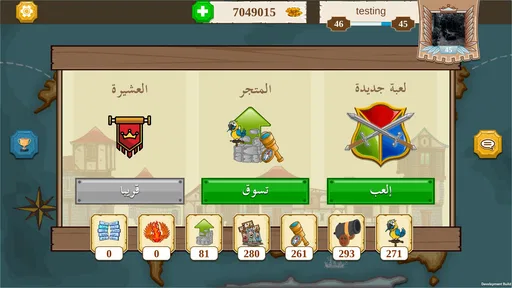
Our Review of قرصان المعرفة
 Analysis by Appyee
Some trivia games are built for quiet thinking, while others turn every question into a small race. قرصان المعرفة sits firmly in the second group. I approached it as a quick competitive quiz rather than a traditional study tool, and that distinction matters: the fun comes from recognizing an answer quickly, choosing under pressure, and trying to make a better decision in the next round. Its questions cover general and varied knowledge, so the experience can move from something familiar to something that exposes a gap in what I know.
The game is developed by RageTeam and is available as a free trivia title for Android users. It is rated for Everyone, works on devices running Android 6.0 or later, and has reached over one hundred thousand installs. The current release is version 1.4.4, while its average score sits at 4.3 from roughly six hundred ratings. Those figures suggest a game with a real audience without making it feel like an overwhelming mainstream platform. I found that appealing because the focus stays on the quiz itself rather than on a huge social ecosystem.
How the quiz loop feels in actual play
When I look at how a quiz session unfolds, I pay attention not only to whether I know an answer but also to how I handle uncertainty and pace. That makes it easier to spot the difference between a knowledge gap and a rushed choice. The next section turns that observation into practical ways to prepare for a smoother session.
The first action: answer before hesitation takes over
The most important moment in قرصان المعرفة is the first question of a session. I am not simply browsing a bank of facts; I am making a choice while trying to balance knowledge and speed. That changes how I read each prompt. A question I might solve comfortably in a relaxed quiz becomes more demanding when I know that a slower decision can affect the competitive result.
The broad subject mix is useful here. A narrowly focused quiz lets me prepare for one type of question, but general trivia keeps me from settling into one reliable pattern. I may feel confident after a familiar question and then meet a topic outside my strongest area. That unevenness is part of the appeal, because it rewards flexible thinking rather than memorizing one predictable route through the game.
My practical advice is to avoid treating every question as a test of absolute certainty. In a timed or competitive setting, overthinking can be as damaging as not knowing. I read the full wording first, identify the options that clearly do not fit, and then commit. This approach makes the game feel more strategic than simply tapping the first answer that comes to mind.
That is also where the game’s planning element becomes noticeable. Knowledge gets me close, but planning affects how I use confidence. If I know an answer immediately, I can preserve attention for the next challenge. If I am unsure, I need to make the best choice available instead of allowing one difficult prompt to consume the entire session. The result is a small but tangible decision layer on top of ordinary trivia.
The feedback rhythm: every answer changes the next decision
A good trivia game needs clear feedback, otherwise the questions blur into a sequence of taps. Here, the answer result gives each choice a consequence. I can tell when my knowledge helped, when speed mattered, and when I allowed doubt to interfere. That immediate rhythm is what keeps the experience active even when the subject matter is familiar.
The feedback is most useful when I treat mistakes as information rather than as a reason to stop. A wrong answer points to a topic I should approach differently in the next session, while a correct answer under pressure reinforces a useful habit: read carefully, eliminate distractions, and decide. I do not need a separate notebook to benefit from this. The game naturally creates small reminders of where my confidence is justified and where it is not.
There is a trade-off, though. Competitive feedback can make a simple quiz feel more stressful than a casual question-and-answer app. Players who prefer unlimited time and a calm learning pace may find the pressure distracting. I would choose a slower educational alternative when my main goal is to understand a subject deeply, because a fast decision does not automatically produce a detailed explanation.
For a group of friends, that pressure can be exactly the point. A short session gives everyone something to react to: an unexpected miss, a confident answer that pays off, or a question that divides the room. I can imagine playing during a break, passing a phone around, or using the game to start a conversation about why an answer is correct. It works best when the people involved enjoy friendly competition rather than taking every result seriously.
The reward: improvement is the reason to begin again
The strongest reward in this kind of game is not only the result at the end. It is the feeling that I can improve my next attempt. When I answer a question correctly after previously missing a similar idea, the improvement feels personal. When I lose a close contest because I hesitated, I immediately have a clear reason to try again.
That creates a useful distinction between a one-time quiz and a repeatable competitive game. A one-time quiz gives me information and ends. قرصان المعرفة gives me a reason to test how I perform when the same broad knowledge base is approached with a different level of focus. I may replay because I want a better result, because I want to challenge someone else, or simply because the previous session ended with one answer I believe I could have handled better.
The free entry point makes that experimentation easy. I can try the core experience without committing money first, which is important for a trivia game because personal enjoyment depends heavily on question style and competitive tolerance. The app includes in-app purchases ranging from $2.99 to $164.99 per item, so I would review any purchase screen carefully and avoid assuming that paying is necessary for a satisfying first impression.
For families, the Everyone rating makes the game easier to consider as a shared activity, but an age label does not guarantee that every question will suit every player’s knowledge level. Younger players may enjoy the challenge, yet adults should still expect uneven results because general trivia naturally favors different backgrounds and experiences. I would use it as a conversation-friendly game, not as a formal measure of intelligence.
One non-obvious benefit is that the reward loop can reveal how I personally handle uncertainty. Some players are fast but careless; others know more than they show because they spend too long checking their instinct. After several sessions, I can see which problem affects me. That makes the game more useful than a simple score chase: it becomes a small exercise in decision discipline.
The session reset: why one result does not settle the experience
The reset is what prevents a bad round from defining the whole game. Trivia is naturally uneven. A session can contain several subjects I know well, followed by a cluster that exposes my weak spots. If I treated one result as a final judgment, the experience would feel arbitrary. Starting again gives me a chance to separate bad luck, unfamiliar topics, and genuine mistakes.
I find this especially helpful when playing competitively. Losing can be frustrating, but the short-session structure encourages a practical response: identify whether I lost through knowledge, speed, or planning, then change one behavior. I might slow down enough to read more carefully, or I might commit sooner when an answer is obvious. The reset has value because it turns frustration into a specific adjustment.
There is a downside to this design. Replaying for improvement can become repetitive if I need constant novelty or a long-form progression system to stay interested. Players who prefer story campaigns, elaborate collections, or a visible character journey will probably find a dedicated game in another genre more rewarding. This is a focused trivia loop, and its appeal depends on whether answering questions is enough of a reason to return.
I would also avoid using it as my only way to learn. The competitive format encourages recognition and quick judgment, but serious study requires explanations, structured lessons, and the ability to revisit material at a slower pace. A flashcard app or subject-specific learning tool is a better choice when I need dependable revision. This game is better at making general knowledge practice lively than at replacing a course.
Another practical consideration is device age. Android 6.0 support makes the game accessible to older compatible phones, but the experience will still depend on how comfortably the device handles the app and how easy it is to read questions on the screen. On a smaller display, I would give myself an extra moment to read rather than blame a rushed tap on my knowledge. That small adjustment can make competitive play feel fairer.
Who will enjoy it most?
I would recommend it to players who like general knowledge, quick decisions, and friendly rivalry. It suits someone who wants a compact game to revisit during spare moments without learning a complicated control system. It is also a good fit for people who enjoy discovering that their strongest subject is not always the one that wins a session; variety keeps the outcome uncertain.
It works particularly well for a friend who says, “I know a lot of random facts,” and wants a way to test that claim. The game gives that person a clear action to take, immediate feedback, a result to react to, and a reason to try again. That complete loop is more engaging than casually reading trivia because it asks for a decision, not just passive recognition.
I would be more cautious recommending it to someone who dislikes time pressure, competitive comparisons, or questions outside a carefully chosen subject. If you want a quiet reference tool, a detailed quiz book, or a learning app that explains every answer in depth, another option will serve you better. The broad question approach is a strength for variety, but it can also feel less satisfying when you want a tightly organized curriculum.
How it compares with ordinary trivia alternatives
Compared with a static trivia book, this game feels more immediate because every question asks me to act and every result affects my desire to continue. A book is better when I want to pause, research an answer, or read a longer explanation. Compared with a solo quiz app built around relaxed practice, this title places more emphasis on speed and planning, so it creates more tension but may offer less calm reflection.
Compared with a general knowledge learning platform, it is lighter and easier to pick up. I do not open it expecting a lesson plan; I open it expecting a challenge. That makes it a better companion for a short break than for exam preparation. The trade-off is clear: the game’s strength is repeatable motivation, while a dedicated learning tool usually provides more structure.
It also differs from trivia experiences that rely mainly on collecting badges or completing a long progression path. Here, the central satisfaction comes from the question-to-question contest. If the quality of your session depends on making smart choices under pressure, that simplicity is refreshing. If you need a large sense of advancement outside the answers themselves, you may eventually want something with deeper progression.
Small strategies that make sessions better
My first useful habit is to separate speed from panic. I try to answer quickly only after I have read the entire question. This prevents a familiar word near the beginning from pushing me toward the wrong choice. It sounds basic, but in a competitive quiz, careless reading is an avoidable source of failure.
Second, I treat uncertain questions as planning problems. I look for the option that fits the wording and remove choices that conflict with the subject or scale of the question. This is not a substitute for knowledge, but it gives me a repeatable method when memory is incomplete. It also keeps one difficult prompt from making the rest of the session feel hopeless.
Third, I use the reset deliberately. Instead of immediately replaying with the same habits, I choose one adjustment for the next attempt. If I missed because I rushed, I read more carefully. If I missed because I hesitated, I trust a well-supported first impression sooner. Changing one behavior makes the next session a test of improvement rather than an identical repeat.
Finally, when playing with others, I would agree on a relaxed attitude before starting. The competitive format is more enjoyable when players can laugh at surprising mistakes and discuss unfamiliar subjects. It is less suitable for a group where one person turns every result into a serious contest. The social value comes from the reactions between questions, not just from naming a winner.
My verdict on the complete loop
RageTeam has made a trivia game whose appeal is easy to understand once the full cycle is visible. I take an action by choosing an answer, receive feedback that exposes both knowledge and decision habits, gain the reward of a good result or a clear lesson, and then reset with a reason to make another attempt. That last step is important: the next session begins because the previous one left something unfinished.
I like that the game does not require me to turn a spare moment into a major commitment. It is free to start, broad enough to avoid feeling like a memorization drill, and competitive enough to make familiar questions feel active. The 4.3 average from around six hundred ratings and its audience of more than one hundred thousand installs fit my impression of a game that has found a solid niche without needing to appeal to everyone.
My main reservation is the same feature that gives it energy. Speed and competition can make the experience less comfortable for players who want detailed teaching or complete control over the pace. The in-app purchase range, from $2.99 to $164.99 per item, is another reason I would stay attentive around optional spending and decide based on actual use rather than impulse.
Overall, I would recommend قرصان المعرفة to a friend who enjoys varied questions and wants a repeatable challenge rather than a textbook in game form. I would skip it for someone seeking deep explanations, a structured study plan, or a rich adventure around the quiz. For the right player, though, the loop is convincing: answer, learn how you reacted, start fresh, and chase the feeling that the next round can go better.
Verdict
Strengths of قرصان المعرفة
- Offers educational content in an engaging quiz-style format.
- Can help reinforce general knowledge through repeated practice.
- Suitable for short sessions during breaks or commutes.
- May appeal to users who enjoy competitive knowledge challenges.
- Provides a lightweight alternative to more complex learning apps.
Limitations of قرصان المعرفة
- Arabic language support may limit accessibility for non-Arabic speakers.
- Question difficulty and accuracy may vary between categories.
- Some content may feel repetitive after extended use.
- Requires a stable connection if questions are loaded online.
- Limited accessibility options may affect some users’ experience.
Similar Picks in This Category
View All
Millionaire 2026 Quiz & Trivia
Quiz & Trivia Games by Submarine Apps4.5

Brain Test 2: Tricky Stories
Unico Studio4.7

Trivia Crack: Brain Quiz Games
etermax4.4

QuizzLand. Quiz & Trivia game
Quiz & Trivia Games by Mno Go Apps4.8

Brain Test: Tricky Puzzles
Unico Studio4.7

Logo Quiz
bubble quiz games4.5
Frequently Asked Questions
What is قرصان المعرفة and what can I do with it?
قرصان المعرفة, whose name can be translated as “Knowledge Pirate,” is an educational and quiz-oriented app designed for users who enjoy testing and expanding their general knowledge. It typically presents questions across subjects such as history, science, geography, culture, and language. Before downloading, users should check the current app description and screenshots to confirm the available categories, supported language, and whether the experience matches their preferred learning style.
Is قرصان المعرفة suitable for children and students?
The app can be useful for students and anyone who wants to practice general knowledge in a more entertaining format, but suitability depends on the questions, difficulty levels, and content included in the current version. Parents should review the listed age rating and try the app before allowing younger children to use it. Also check whether advertisements, external links, or online features are present.
Does قرصان المعرفة require an internet connection?
Internet requirements may vary depending on how the app delivers its questions and updates. Some quiz applications allow basic play offline after installation, while others need a connection for loading content, saving progress, displaying advertisements, or accessing rankings. It is best to review the store listing and test the app with Wi-Fi disabled if offline access is important to you, especially when traveling or using limited mobile data.
Is قرصان المعرفة free to download and use?
قرصان المعرفة may be available as a free download, but users should carefully review the store page for advertisements, optional purchases, subscriptions, or locked question packs. A free installation does not always mean that every feature is available without payment. Before starting, check the pricing section, in-app purchase details, and permissions requested by the application so there are no unexpected costs or privacy concerns.
What should I check before installing قرصان المعرفة?
Before downloading قرصان المعرفة, confirm that your Android or iOS device meets the required operating-system version and has enough storage space. You should also verify the developer name, recent update date, user reviews, privacy policy, and requested permissions. Because quiz content and availability can change between versions, checking the official store listing is the safest way to confirm compatibility, language support, account requirements, and current features.
Play our best games!


